Most companies don't know their HubSpot is broken.
Not because the platform is failing. Not because the team forgot to set it up. The portal is running, the dashboard is loading, deals are moving through stages.
But the foundation is lying to you.
HubSpot shipped its most ambitious AI features yet in Spring 2026: Smart Deal Progression, a rebuilt Prospecting Agent, forecast models that retrain continuously as deal data comes in. The promise is real. The technology works.
The problem is what it reads when it works.
AI doesn't analyze your business. It analyzes your CRM data. And if your CRM data is broken, you don't get bad AI. You get confident, fast, wrong AI. At scale.
The Real State of HubSpot Portals in 2026
Here's what we see in almost every audit:
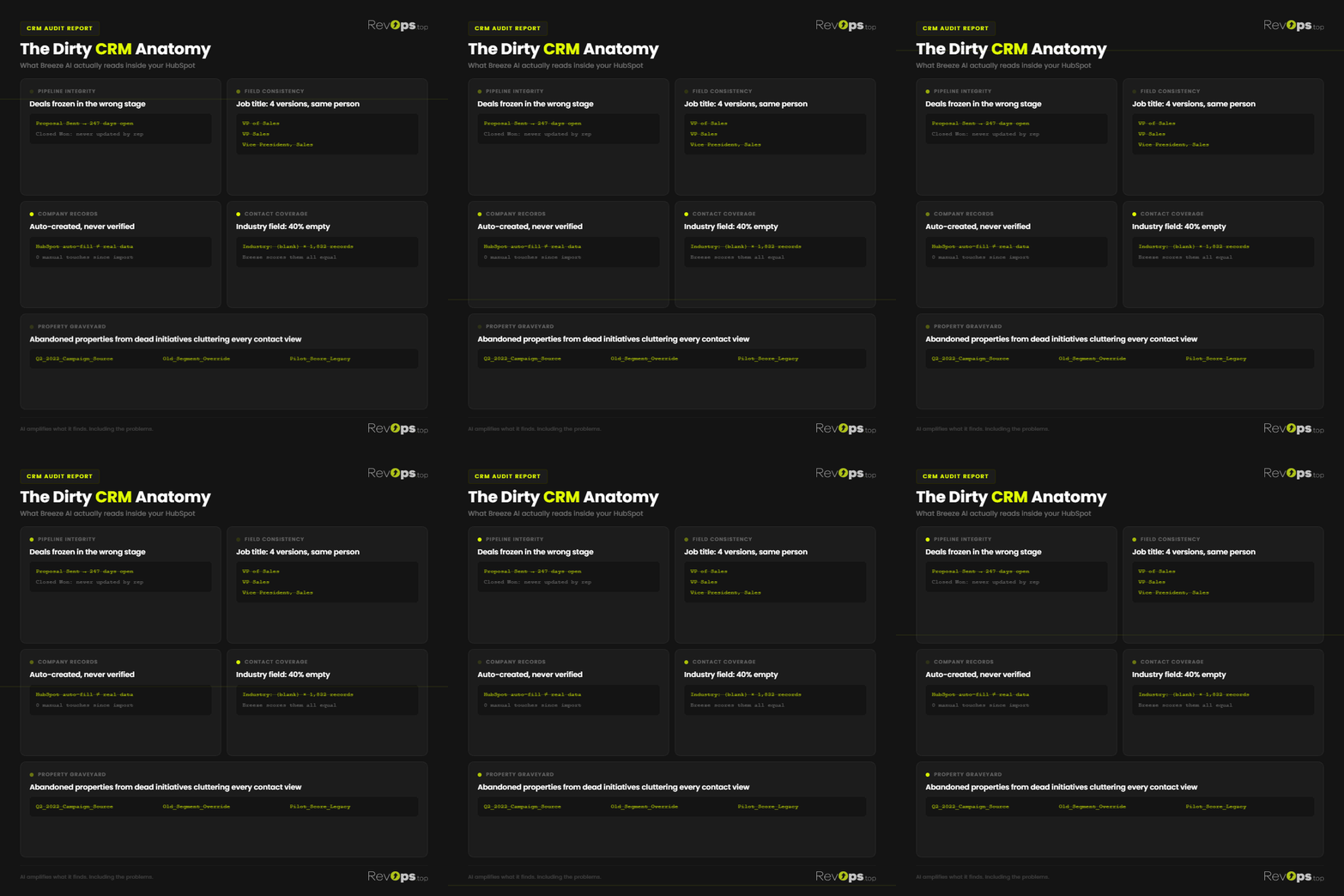
Deals sitting in "Proposal Sent" for 8 months after they closed. Company records auto-created by HubSpot's native enrichment, never verified, never merged. "VP of Sales", "VP Sales", "Vice President, Sales", "VP-Sales" as four separate values in the same Job Title field. Custom properties created for a Q3 initiative in 2023, never populated since, now cluttering every contact view.
None of this is negligence. It's the natural accumulation of a platform used intensively over years without governance. The portal works. Reports run. But the underlying record quality has silently degraded to the point where AI tools can't function reliably.
Why This Becomes Critical Now
The Salesforce 2024 State of CRM report found that 91% of CRM data is incomplete. That number has been true for years. What changed is the consequence.
Before AI features, bad data meant inaccurate reports and wasted outreach. Annoying, but recoverable. You could eyeball the pipeline and compensate for the noise.
AI features remove that human correction layer.
When HubSpot's Smart Deal Progression reads your pipeline, it learns from stage patterns. If one rep moves deals to Closed Won at contract signature and another does it at payment received, the model learns two conflicting definitions of "won." The forecast it produces isn't wrong because the algorithm is flawed. It's wrong because the input is contradictory.
When Breeze AI scores a lead, it reads the fields available. If 40% of your contacts are missing Industry, the model either ignores the signal or fills it with noise. Either way, your highest-value segment looks identical to your lowest-value one in the scoring layer.
This is the core problem: AI amplifies whatever is in the system, including the problems. Garbage in doesn't produce garbage out anymore. It produces confident, plausible-sounding garbage out. That's worse.
The 5 Signs Your HubSpot Data Is Broken
1. Your pipeline report and your sales team tell different stories. The dashboard shows $480K in active opportunities. Your VP of Sales says "honestly, maybe $80K is real." That gap isn't a forecasting problem. It's a data integrity problem. Pipeline stages without observable exit criteria let reps interpret them differently, and three reps, three definitions, one pipeline that becomes a fiction.
2. Your CRM adoption rate is below 60% after six months. Fewer than six in ten reps consistently logging activity, updating deal properties, and moving stages inside HubSpot means your system of record isn't. It's a reporting obligation that half your team is gaming. Low adoption isn't a motivation problem. It's a signal that the CRM was built for the person who implemented it, not for the people using it daily.
3. You've added automations on top of automations to fix the first automations. A workflow to assign leads. Three months later, territory changes, nobody updates the workflow. A second one to catch exceptions. Six months after that, a third for a new product line. Now you have three overlapping workflows firing on similar triggers, no documentation, and a support ticket every time a lead falls through. This is automation debt. And it compounds exactly like financial debt.
4. Lifecycle stages don't reflect how your customers actually buy. HubSpot's default lifecycle stages were designed as a framework, not a prescription. Most companies implement them and then wonder why marketing and sales define "qualified" differently. The problem is that lifecycle stages are written, not enforced. What makes a lead an MQL? If the answer is "it depends" or "the stage is kind of meaningless," your funnel reporting is measuring activity, not momentum.
5. Your "clean data" project has been on the roadmap for over 90 days. Every RevOps team has a version of this. A spreadsheet, a Notion doc, or a ticket somewhere that says "data cleanup" with a target date that keeps moving. Here's the hard truth: data quality doesn't decay because people enter bad data. It decays because the system has no governance model to prevent it. You can clean the data today and it will be dirty again in 90 days if the underlying architecture is still producing bad inputs.
The Fix Is Not a Cleanup. It's an Architecture Decision.
Every broken HubSpot we've audited was capable of exactly what the business needed. The problem was never the platform. It was the architecture decisions made during implementation, the governance decisions never made at all.
The good news: broken CRM implementations are recoverable. They follow predictable patterns. They have known fixes. And the work is measurable.
The bad news: they don't fix themselves. Every quarter you run on a broken architecture is a quarter of pipeline data you can't trust, forecasts you can't make, and revenue decisions built on structurally incorrect information.
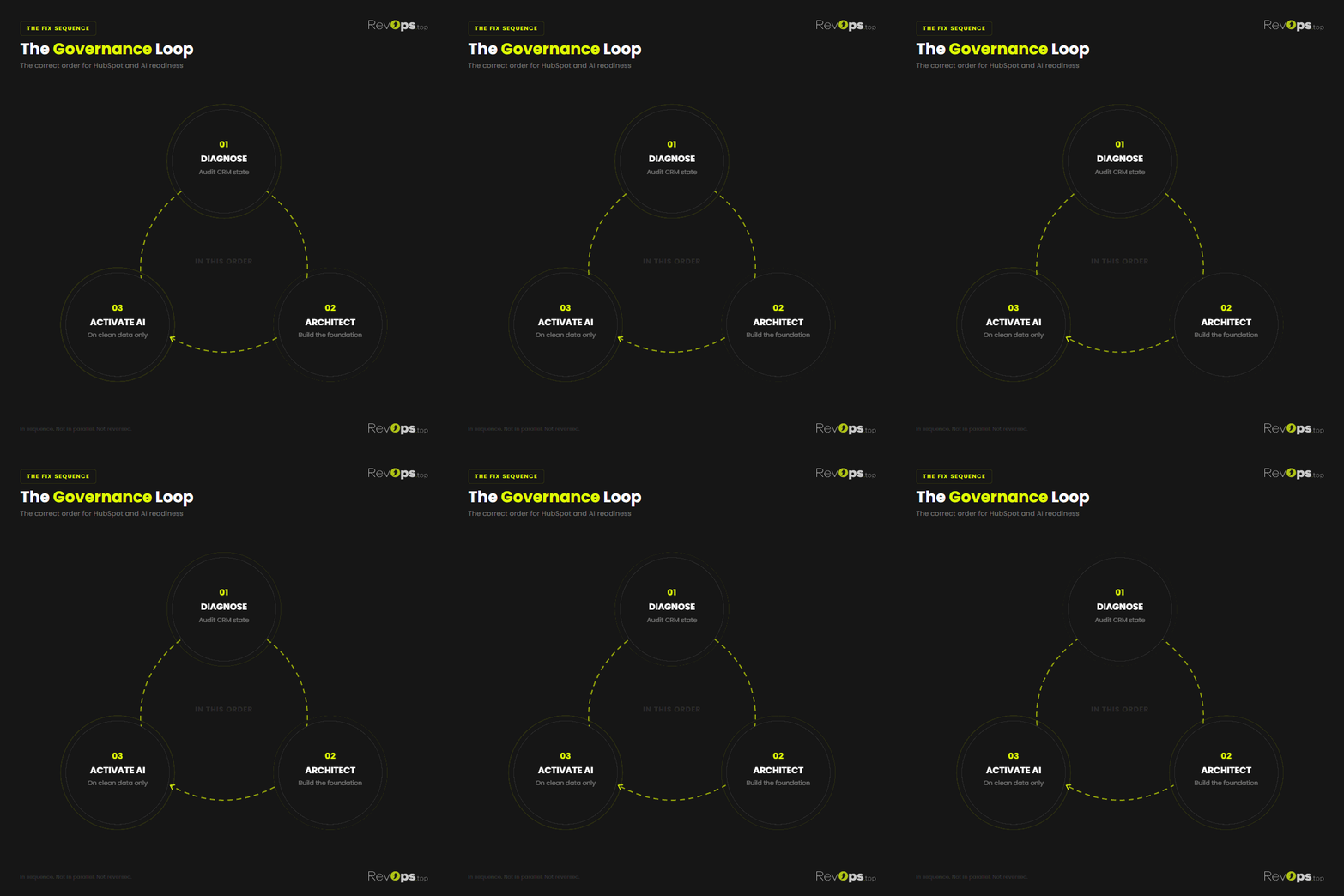
The correct sequence:
- Diagnose the actual state of the data before activating any AI feature
- Rebuild the architecture: property framework, stage definitions with observable exit criteria, governance rules for data entry
- Activate AI on a clean, consistent foundation
That's the work. It's not glamorous. It's also the work that makes everything else function.
If you recognized your HubSpot in three or more of these signs, the next step isn't adding more automation or buying more tools. It's an honest audit of what's broken at the foundation.
That's exactly what our $1,500 CRM Audit is built for. In five business days, we map every leak in your pipeline architecture and hand you a prioritized list of what to fix first, what it will take, and what it will cost to leave it broken.
[Book a Strategy Call →]